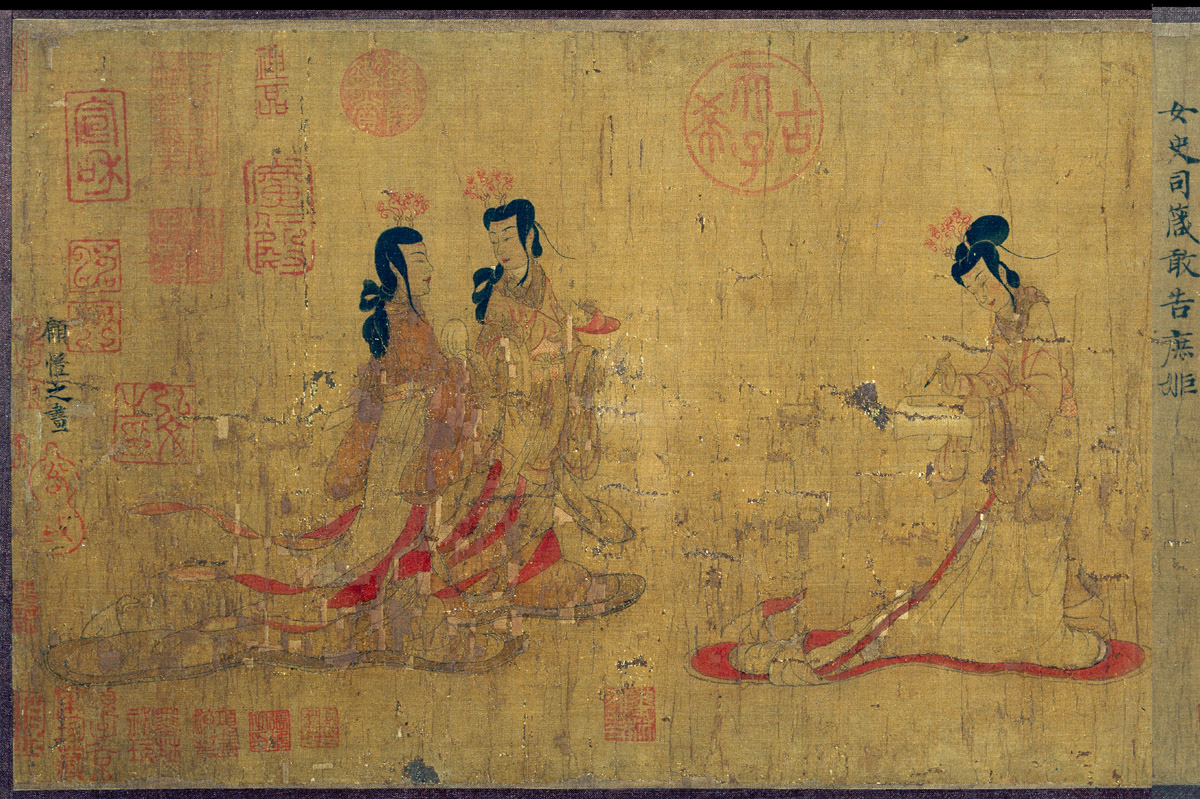
Ban Zhao is a name you might’ve heard in a history class, usually whispered alongside words like "patriarchy" or "subjugation." Honestly, if you just skim her most famous work, Nüjie (Lessons for Women), it’s easy to see why. She talks about women being "lowly and weak." She suggests they should "endure insults."
But here’s the thing: Ban Zhao wasn’t some random voice in the wind. She was the first female Chinese historian. She finished the Book of Han after her brother died. She was basically the tutor to the Empress. So, when a woman with that much power writes Ban Zhao Admonitions for Women, we have to ask—was she actually trying to keep women down, or was she teaching them how to survive a world that already was?
The "Humble" Reality of the Han Dynasty
You've got to look at the context. It was around 100 CE. The Han Dynasty was a place where Confucianism wasn't just a philosophy; it was the law of the land. Ban Zhao wrote these seven chapters for her daughters because she was worried about them. They were getting married off into noble families, and she knew that one wrong word or one "proud" look could get them kicked out—or worse.
The Seven Chapters of Survival
The book isn't some long-winded novel. It's a manual.
- Humility: This is the one that makes modern readers cringe. She says a baby girl should be placed under the bed for three days to show she's "lowly."
- Husband and Wife: She explains the Yin and Yang of it all. Hard vs. Soft.
- Respect and Caution: Basically, don't pick fights.
- Womanly Qualifications: She defines virtue, words, bearing, and work.
- Wholehearted Devotion: Loyalty to the husband, even after death.
- Implicit Obedience: Bending to the will of the in-laws.
- Uncles and Sisters-in-law: How to get along with the extended family so they don't gossip about you.
It sounds oppressive. Because it was. But Ban Zhao was a pragmatist. She wasn't writing a feminist manifesto for the year 2026. She was writing a "don't get divorced and disgraced" guide for the year 105.
Why Ban Zhao Admonitions for Women was actually "Radical"
Wait, radical? Yes.
If you look closer at Chapter 2, Ban Zhao drops a bombshell that most people skip over. She argues—very clearly—that girls should be educated just like boys.
She writes that if you only teach men and not women, you’re ignoring the essential relationship between the two. She points out that the "Rites" say children should start reading at eight. She asks, point-blank: why shouldn't this apply to girls? This was a massive deal. In a society that thought women's brains were only good for weaving and cooking, the most powerful woman in the intellectual world was saying, "Hey, we need to read books too."
She used the "system" to advocate for women. She argued that a woman couldn't properly serve her husband or maintain the "harmony" of the state if she was illiterate and ignorant. It was a Trojan Horse. She used the language of submission to demand the right to education.
The Yin and Yang Trap
Ban Zhao used the concept of Yin and Yang to justify her points. To her, Man is Yang (Rigidity/Strength) and Woman is Yin (Yielding/Gentleness).
"Man is honored for strength; a woman is beautiful on account of her gentleness."
Modern critics like Nancy Lee Swann and later scholars have debated this for decades. Was she reinforcing a toxic hierarchy? Sorta. But she also argued that if a husband isn't "worthy," he can't control his wife. She placed a burden of "virtue" on the men too. She warned husbands that if they were angry and beat their wives, the "proper relationship" was destroyed. She was calling for a version of domestic peace that was rare for her time.
Misconceptions We Need to Clear Up
People often think Ban Zhao Admonitions for Women was written to please the Emperor. Not really.
She wrote it for her daughters. It just happened to become a bestseller because it was so well-argued. It became the "gold standard" for female conduct for almost two thousand years. That's a lot of pressure for a mom's advice column.
Another big mistake is thinking she wanted women to be "beautiful." She actually said a woman’s appearance "requires neither a pretty nor a perfect face." She cared about character. She cared about "womanly work"—being industrious and finishing tasks completely. She was a fan of the "quiet life," not the "glamorous life."
Actionable Insights from an Ancient Text
You don't have to follow the "Three Submissions" to learn something from Ban Zhao. If we strip away the 1st-century patriarchy, there are a few human truths left over:
- Adaptability as Power: Ban Zhao knew how to navigate a system that didn't favor her. Sometimes, "yielding" is a strategic choice, not a sign of weakness.
- Education is the Foundation: Even 2,000 years ago, the smartest woman in China knew that knowledge was the only way to have "agency" (even if she didn't use that word).
- The Power of Words: She emphasized "womanly words"—not being clever in debate, but choosing words carefully to avoid "vile" conflict. In an era of internet flame wars, "speaking only at the appropriate moment" isn't the worst advice.
How to Explore This Further
If you want to really get into the nuance of the Ban Zhao Admonitions for Women, don't just read the summaries.
- Read the full translation: Look for the translation by Nancy Lee Swann in "Pan Chao: Foremost Woman Scholar of China." It’s the academic benchmark.
- Compare with the "Analects": See how she takes Confucius’s vague ideas and turns them into specific rules for women.
- Check out the "Four Books for Women": This was a later compilation from the Ming Dynasty that included Ban Zhao's work. It shows how her ideas were "tightened" and made even more restrictive centuries later by male editors.
Ban Zhao remains a contradiction. She was a scholar in a world that hated educated women. She was a powerful advisor who preached humility. She was a pioneer who, in some ways, built the cage that trapped the women who came after her. But she did it all with a brush in her hand and a sharp eye on the survival of her family.
To understand her is to understand the complex dance of power and gender that has been playing out for millennia. It’s not just "ancient history"—it’s the blueprint of how people find a way to lead even when they’re told to follow.