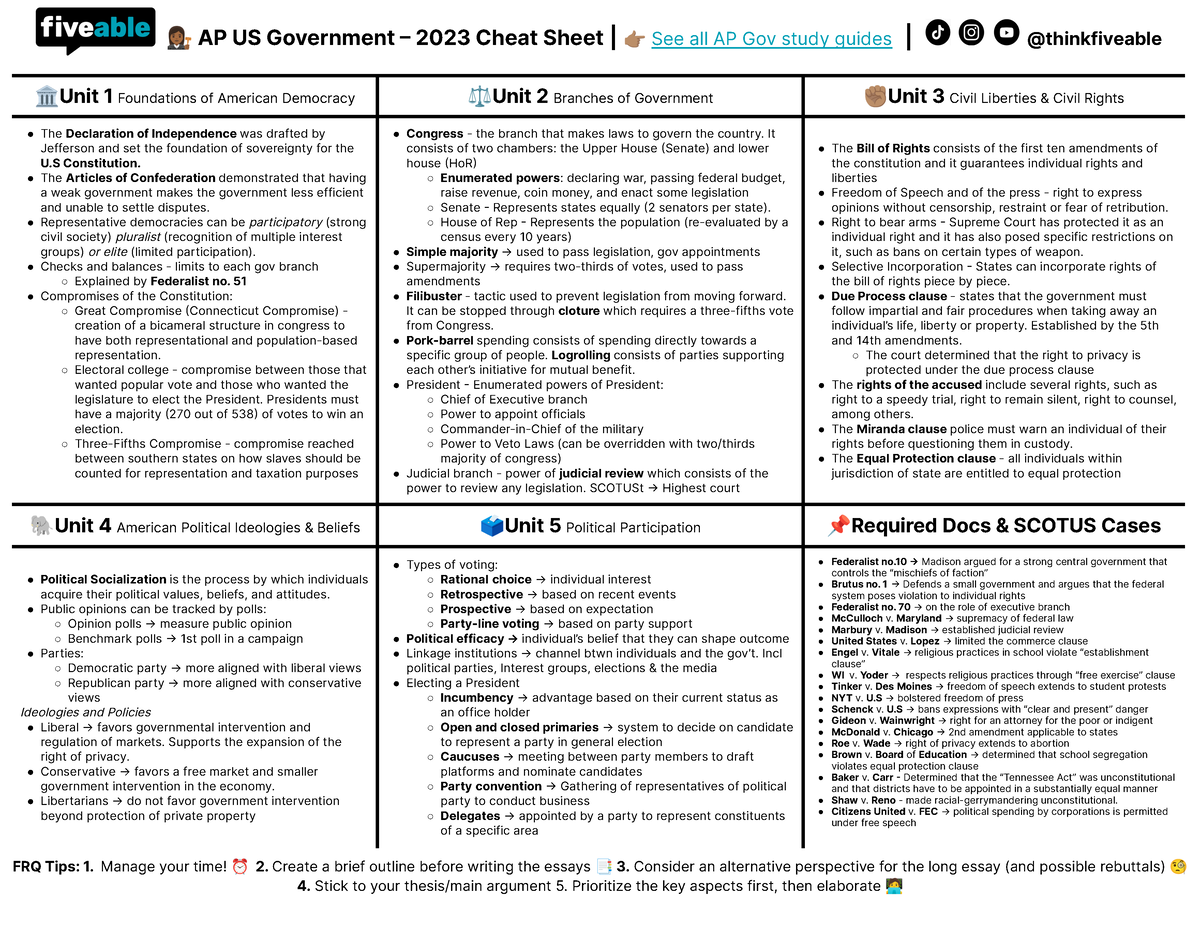
You're sitting in class. The teacher mentions the electoral college ap gov definition, and suddenly everyone’s eyes glaze over. It sounds like one of those dry, dusty relics from 1787 that has no business existing in a world of instant TikTok updates and digital democracy. But honestly? It’s probably the most high-stakes "math problem" in American history. It isn't just a term to memorize for a May exam; it’s the entire reason candidates spend all their time in Pennsylvania and Michigan while basically ignoring California and Texas.
The system is weird.
Instead of a giant national pool where every single vote is tossed into one bucket, we have 51 smaller races (50 states plus D.C.). You aren't actually voting for a human being when you pull that lever. You're voting for a "slate" of electors. These are real people—party loyalists, activists, or local officials—who have promised to go to their state capital and cast the real vote later. It’s a winner-take-all game in almost every state. If you win Florida by one single vote, you get all 30 of their electoral votes. The other guy gets zero.
Defining the System Without the Textbook Fluff
If you want the formal electoral college ap gov definition, here it is: It’s a body of 538 electors established by the Constitution who cast the official ballots for President and Vice President. To win, a candidate needs a majority of 270.
Where does 538 come from? It's just simple addition. Take the 435 members of the House, add the 100 Senators, and throw in 3 for the District of Columbia (thanks to the 23rd Amendment). This formula is why the system is so controversial. Because every state gets two Senators regardless of size, tiny states like Wyoming have more "voting power" per person than giants like New York. In Wyoming, one electoral vote represents roughly 190,000 people. In California? It’s more like 700,000.
That’s a massive gap.
It creates a scenario where a candidate can win the popular vote—getting millions more individual ballots—and still lose the White House. We saw it in 2000 with Al Gore and George W. Bush. We saw it again in 2016 with Hillary Clinton and Donald Trump. It’s the "glitch" in the system that isn't actually a glitch; it was a deliberate design choice by the Framers who didn't fully trust the "uneducated masses" or a direct popular vote.
The Constitutional "Why" Behind the Madness
The Founders were kind of obsessed with compromise. They were stuck between two groups. One group wanted Congress to pick the president (which would make the executive a puppet of the legislature). The other group wanted a direct popular vote. Alexander Hamilton and his crew were worried that a direct vote would lead to "mob rule" or that voters wouldn't know enough about candidates from other states.
They settled on the Electoral College as a middle ground.
It was also, quite frankly, tied to the messy reality of slavery. The Three-Fifths Compromise allowed Southern states to count enslaved people toward their population totals for House seats. Since electoral votes are tied to House seats, this gave the South an outsized influence in picking the President without actually giving enslaved people the right to vote. It’s a dark part of the electoral college ap gov definition that textbooks sometimes gloss over, but it’s essential for understanding why the system was built this way.
How the Winner-Take-All System Warps Campaigns
Most states use a winner-take-all method. If you get 50.1% of the vote in Ohio, you take all the electoral votes. This is why "swing states" or "battleground states" are the only places that seem to matter during election season.
- Safe States: If you're a Democrat in Alabama or a Republican in California, your vote for President technically counts toward your state's total, but it won't change the outcome of who gets the electoral votes.
- The Exceptions: Maine and Nebraska are the rebels. They use a "proportional" system where they split their votes. They give two votes to the statewide winner and then one vote to the winner of each congressional district.
- The Strategy: Campaigns ignore about 40 states because they already know who will win there. They pour hundreds of millions of dollars into places like Arizona, Georgia, and Wisconsin.
This creates a weird incentive structure. A candidate doesn't need to appeal to the whole country. They just need to appeal to a very specific slice of suburban voters in the Rust Belt and the Sun Belt.
What Happens if Nobody Hits 270?
This is where things get truly chaotic. If there’s a tie (269-269) or a third-party candidate prevents anyone from hitting 270, the election goes to the House of Representatives. This is called a "contingent election."
But it’s not one vote per Congressman. That would be too easy.
Instead, each state delegation gets exactly one vote. All the representatives from Florida have to huddle up and decide who their one vote goes to. It’s happened before—most notably in 1824 when Andrew Jackson won the popular vote but lost the presidency to John Quincy Adams in the House. Jackson called it a "Corrupt Bargain." People were furious. It changed American politics forever, leading to the birth of the modern Democratic Party.
Federalism vs. Democracy: The Great Debate
When you're studying the electoral college ap gov definition, you'll keep hitting the wall of Federalism. Supporters of the system argue that it forces candidates to pay attention to rural states. Without it, they claim, candidates would just spend all their time in Los Angeles, New York City, Chicago, and Houston. They argue it maintains the "compact" between the states.
Critics? They say it’s fundamentally undemocratic.
They point out that the "swing state" argument is flawed because candidates already ignore most of the country anyway. Why should a voter in Ohio be more important than a voter in Mississippi or Oregon? There's also the issue of "Faithless Electors." These are electors who decide to vote for someone other than the candidate they pledged to support. While many states now have laws to punish or replace them, the Supreme Court only recently confirmed in Chiafalo v. Washington (2020) that states actually have the power to enforce those pledges.
Real-World Implications for the AP Exam
For the AP Gov exam, you need to connect this to the bigger picture. It’s not just a definition; it’s about Article II of the Constitution. It’s about the 12th Amendment, which separated the ballots for President and Vice President (after the disastrous tie in the 1800 election).
Think about how it affects:
- Third Parties: The winner-take-all system makes it almost impossible for a third party to win electoral votes. Ross Perot got nearly 19% of the popular vote in 1992 but walked away with zero electoral votes.
- Voter Turnout: If you live in a "safe" state, you might feel like your vote doesn't matter, which can depress turnout.
- Mandate to Rule: A president who wins the Electoral College but loses the popular vote often struggles with perceived legitimacy, making it harder to push their legislative agenda through Congress.
Actionable Insights for Mastering the Topic
Don't just memorize the number 538. Understand the "why" behind the numbers.
To really nail this on an FRQ (Free Response Question), start by practicing the math of a contingent election. Imagine a three-way race where no one hits 270. Map out how a state like Wyoming has the same power as California in that specific House vote. That nuance usually earns the "sophistication" point.
Keep an eye on the National Popular Vote Interstate Compact. This is a real-world movement where states are passing laws to give their electoral votes to whoever wins the national popular vote, but only once enough states join to reach 270. It’s a "workaround" that doesn't require an amendment to the Constitution. Knowing about this shows you understand that the system is dynamic, not just something frozen in a 1700s textbook.
Review the 2000 and 2016 maps. Look at the margins. Sometimes a few thousand votes in one county can flip an entire block of 15 or 20 electoral votes. That is the essence of American presidential politics. It’s a game of inches played on a map of states, not a game of totals played on a map of people.
Focus your study time on the relationship between the Electoral College and the concept of Elite Democracy. The system was designed to be a buffer. Whether that buffer is still necessary—or even functional—is the debate that has defined American elections for over two centuries. Use the specific vocabulary: electors, winner-take-all, 270 to win, and contingent election. If you can weave those into a coherent argument about why a candidate might win the popular vote but lose the presidency, you've mastered the concept.