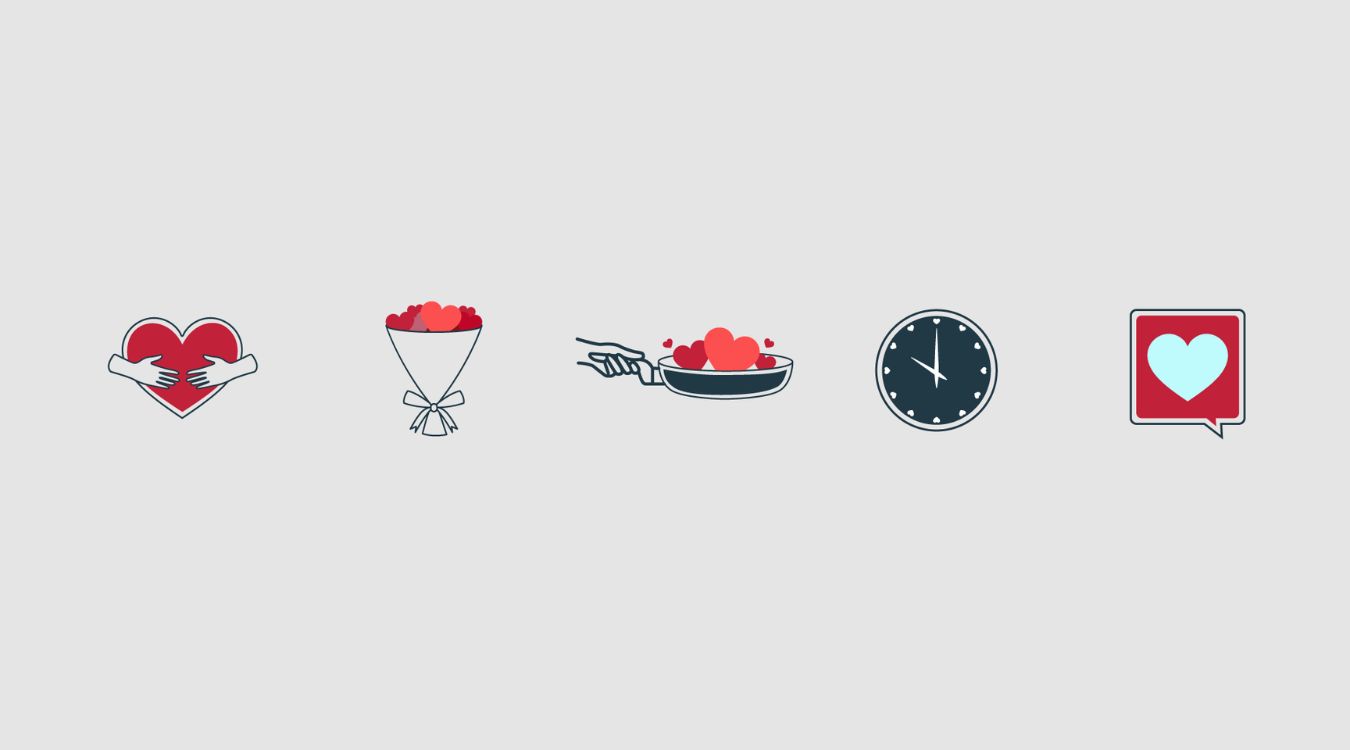
Relationships are messy. You think you're showing someone you care by doing the dishes or picking up their favorite snacks, but they just seem... annoyed? Or maybe they feel neglected because you didn't sit on the couch and stare into their eyes for twenty minutes. It’s a classic disconnect. Most of us have heard of Gary Chapman’s original five categories, but lately, the truity love language quiz has been popping up everywhere as a more "modern" alternative.
I’ve spent a lot of time looking into personality psychometrics. Honestly, the original 1992 framework—Words of Affirmation, Acts of Service, Receiving Gifts, Quality Time, and Physical Touch—is a bit dated. It feels a little rigid for 2026. Truity, a platform founded by Molly Owens, tries to bridge that gap by applying more rigorous data to the way we express affection.
Is it actually more accurate? Maybe. It’s certainly more detailed.
Why the Truity Love Language Quiz is Surging in Popularity
The internet loves a quiz, but there's a reason people are shifting away from the classic 5 Love Languages site toward Truity's version. The original test is binary. You have to choose between two options that might both feel wrong. "Would you rather your partner give you a hug or tell you you're doing a great job?" What if I'm grumpy and don't want to be touched, but I also think verbal praise is cheesy?
Truity uses a Likert scale. You rate how much you enjoy certain behaviors from "Not at all like me" to "Exactly like me." This matters.
Psychologically, we aren't just one thing. We are a spectrum. Truity's algorithm recognizes that you might value "Quality Time" at a 90% intensity while "Gifts" sits at a 10%. It’s not just about what your "top" language is; it’s about the delta between them. When I took it, I realized my secondary language was almost as important as my first, which explained why I felt so unfulfilled in past relationships where only my primary need was being met.
The Science (or lack thereof) Behind the Categories
Let’s be real for a second. The concept of "love languages" isn't exactly a hard science like organic chemistry. It’s a social construct. However, researchers like Egbert and Polk (2006) have actually studied Chapman's model and found that while it's a great communication tool, it doesn't always hold up under strict statistical scrutiny.
Truity tries to fix this. They use a larger sample size of digital data to refine their questions. They aren't just relying on anecdotal evidence from a marriage counselor's office in the 90s. They’re looking at how hundreds of thousands of people respond to modern scenarios.
Think about "Quality Time." In 1992, that meant a walk in the park. In 2026, does it mean "body doubling" while you're both on your laptops? Does it mean watching a TikTok together? The truity love language quiz nuances these modern interactions better than the legacy versions do.
What Most People Get Wrong About Their Results
Most people take the quiz, see "Physical Touch," and think, "Okay, I just need more sex."
That’s a huge misunderstanding.
Physical touch in this context is about non-sexual intimacy—holding hands, a hand on the shoulder while walking past, or just sitting close enough that your legs touch. When users take the Truity version, the report breaks down these sub-categories. It differentiates between "intimacy" and "closeness."
Another common error? Thinking your love language is the way you give love. Usually, it's the way you receive it. You might be a "Gifts" giver because that's how you were raised, but deep down, you actually crave "Acts of Service." If you don't realize there's a disconnect between your giving and receiving styles, you'll burn out. You'll keep buying flowers for a partner who just wants you to take the car for an oil change.
The Dark Side of Love Language Labels
We have to talk about "weaponized" love languages. It’s a thing.
"You're not touching me enough, and that's my love language, so you're a bad partner." This is where the truity love language quiz can actually be a bit dangerous if you're using it as a scorecard rather than a map. I’ve seen couples use their results as a way to demand labor from their partners.
- Acts of Service becomes a way to avoid chores.
- Words of Affirmation becomes a demand for constant ego-stroking.
- Quality Time becomes a tool for codependency.
The goal isn't to force your partner to speak your language 24/7. It’s to help them understand the "translation." If I know my wife values Acts of Service, I realize that cleaning the kitchen isn't just a chore—it's a literal "I love you" in her dialect. If she knows I value Words of Affirmation, she realizes that a quick text saying "I'm proud of you" carries more weight than a $50 steak dinner.
How Truity Compares to Other Assessments
There are dozens of these tests out there now. You've got the 5 Love Languages, the MBTI-based romance reports, and even the "Attachment Style" quizzes which are arguably more important for long-term stability.
Truity sits in the middle. It’s more "pop psych" than a clinical attachment assessment, but it’s more "data-driven" than a BuzzFeed quiz. Their interface is clean. The results are easy to read on a phone. Crucially, they offer a "free" version that is actually useful, though they do try to upsell you on the $19 full report.
Do you need the full report? Honestly, probably not. The basic breakdown of your percentages is usually enough to spark the necessary conversation. However, if you're a data nerd and want to see how you compare to the "average" person of your gender or age group, the paid version has some interesting insights. For instance, did you know that younger generations are statistically trending higher toward Quality Time and lower toward Receiving Gifts? It says a lot about our current economy and social isolation.
A Quick Reality Check on Compatibility
Can two people with completely opposite love languages survive?
Yes.
Absolutely.
In fact, it's common. If two people both have "Words of Affirmation" as their top language, they might end up in a feedback loop where they’re both talking but nobody is actually doing anything (the "Acts of Service" void). The friction of having different languages is often what forces a couple to grow. It requires you to step out of your comfort zone.
I once worked with a couple where he was "Physical Touch" and she was "Acts of Service." He felt rejected because she was always busy doing laundry or prepping meals instead of cuddling. She felt unappreciated because he was "lazy" and just wanted to hang out on the couch while she worked. Once they took the truity love language quiz, they saw the numbers. They realized they weren't "bad" or "incompatible"—they were just speaking French and German to each other.
Actionable Steps: What to Do After the Quiz
Taking the quiz is the easy part. It’s the "infotainment" phase. The actual work starts about ten minutes after you hit submit. If you've just finished your assessment, don't just screenshot it and send it to your partner with a "lol this is me."
1. The "Audit" Phase
Look at your bottom language. This is usually your "blind spot." If "Gifts" is at 5%, you probably never think to buy things for your partner. But if their "Gifts" score is at 80%, you are systematically failing to make them feel loved, even if you think you're doing everything right. Start a small "gift fund" or a note in your phone for ideas.
2. The 7-Day Challenge
Pick one language that is NOT your own but IS your partner's. For one week, make a conscious effort to perform one small action in that language every single day. Don't tell them you're doing it. See if their mood or the "vibe" in the house shifts.
3. Define the Terms
Sit down and actually define what the categories mean to you. "Quality Time" to one person is a 4-hour hike. To another, it's sitting in the same room reading different books. Use the Truity results as a prompt to say: "Hey, I saw I scored high on Acts of Service. For me, that specifically means help with the mental load, like planning the grocery list."
4. Check the "Shadow" Language
Every love language has a "flip side." If your language is Words of Affirmation, insults or harsh critiques don't just hurt—they're devastating. They feel like a breakup. Share these "anti-languages" with your partner so they know where the landmines are buried.
The Verdict on Truity’s Method
Is the truity love language quiz the end-all-be-all of relationship advice? No. No single quiz can capture the complexity of human attachment or the way trauma affects our needs.
However, as a tool for self-awareness, it’s remarkably effective. It moves the needle from "I'm unhappy" to "I'm missing a specific type of connection." It gives you a vocabulary.
If you're feeling a bit stagnant in your relationship, or even if you're single and trying to figure out why your last three relationships fizzled out, it’s worth the ten minutes it takes to answer the questions. Just remember that the result isn't a personality trait—it's a preference. And preferences can change as we age, as we heal, and as we meet new people who challenge us to see love differently.
To move forward, take your results and find three specific, low-effort behaviors you can request from your partner. Instead of saying "I need more Quality Time," try "I'd love it if we could have coffee together for 15 minutes every morning without our phones." Specificity is the only way these quizzes actually change your life. Without it, they're just another way to procrastinate on the internet.