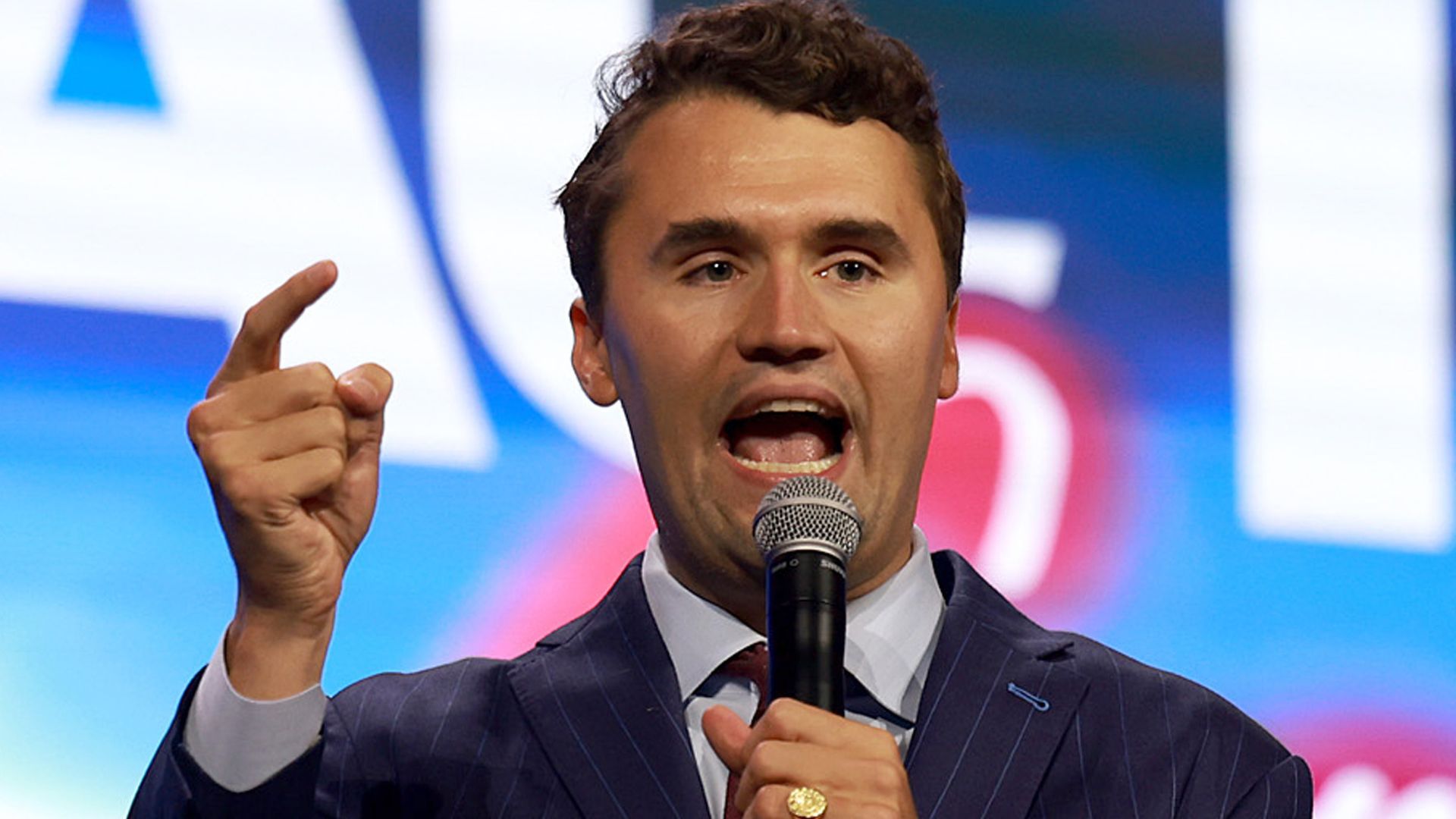
Most people think of Charlie Kirk as a permanent fixture of the Phoenix desert or a recurring face on a Mar-a-Lago balcony. But if you really want to know where did Charlie Kirk live, you have to look at a trajectory that moved from the quiet, snowy suburbs of Illinois to the high-stakes luxury real estate of Scottsdale. Honestly, his residential history is basically a map of his political rise. It wasn't just about finding a place to sleep; it was about moving to where the "heartland" met the donor class.
Kirk's story ended tragically in 2025, but the places he called home during his thirty-one years tell a specific story about the modern conservative movement. He didn't stay in the Chicago suburbs where he was born. He didn't head to D.C. like most political operatives. He chose a path that was, quite literally, a strategic relocation.
The Illinois Roots: Where It All Started
Charlie was a suburban kid through and through. Born in Arlington Heights, Illinois, on October 14, 1993, he didn't grow up in the city of Chicago itself. His childhood was spent in Prospect Heights, a nearby suburb that feels a world away from the Windy City's skyscrapers. His parents, Robert and Kathryn Kirk, were professionals—his dad an architect and his mother a mental health counselor.
They lived in a neighborhood that valued traditional Midwestern stability. This is where he became an Eagle Scout. This is where he attended Wheeling High School. It was in this specific Illinois landscape that Kirk had his "origin story" moment, protesting a price hike for cookies in the school cafeteria and writing op-eds for Breitbart while he was still a teenager.
For a hot second, he lived the life of a local college student. After graduating high school, he briefly attended Harper College in Palatine, Illinois. He didn't stay long. He dropped out to found Turning Point USA (TPUSA) in 2012, setting up the organization's first "headquarters" in a garage in Lemont, Illinois.
The Big Move: Why Phoenix?
By 2017, Kirk made a massive life change. He packed up and moved the whole operation to Arizona. Now, you might wonder why a kid from Illinois would pick the Valley of the Sun. Most people in the political world think you have to live in the "Beltway" (the D.C. area) to matter.
Kirk and his partner Tyler Bowyer had a different theory. They felt D.C. was "out of touch." They wanted to be in the heart of a swing state, somewhere that felt like "everyday America" but still had the wealth to support a growing non-profit. They chose Mesa first, setting up a small office there before eventually moving the Turning Point headquarters to the Ahwatukee neighborhood of Phoenix.
The Scottsdale Mansion Era
As his influence grew, so did his real estate portfolio. Kirk eventually settled in Scottsdale, specifically in the ultra-exclusive Silverleaf community. This wasn't just a house; it was a statement.
- The Price Tag: He purchased a custom-built mansion in June 2023 for roughly $4.75 million.
- The Stats: We’re talking 6,800 square feet, six bedrooms, and six bathrooms.
- The Vibe: Spanish-style architecture, exposed beams, and a massive kitchen with a double-door fridge that looked like it belonged in a restaurant.
It’s kinda fascinating that even as he railed against "elites," he was living in one of the most elite ZIP codes in the country. The home featured a heated pool, a guest casita, and a high-end security system—something he unfortunately needed given the nature of his work. Interestingly, he actually listed this property for sale for $6.5 million in early 2024, just a year before his death.
The Florida Connection and the Manhattan "Sanctuary"
In the years leading up to 2025, Kirk's living situation became more "multi-state." Because of his close ties to Donald Trump, he was a frequent guest at Mar-a-Lago in Palm Beach. While he didn't "live" at the club, he spent so much time in Florida that many people assumed he had relocated there permanently.
He did, in fact, move his family to Florida for a period. His wife, Erika Frantzve, and their two young children reportedly utilized a high-end apartment in Manhattan as well. This NYC spot was their "sanctuary" in the city—a three-bedroom unit decorated with Christian children's literature and photos of the family with Trump.
It was a far cry from the garage in Lemont.
Where Was He When He Died?
The question of "where did Charlie Kirk live" took a dark turn on September 10, 2025. Kirk wasn't at any of his homes when the end came. He was on the first leg of his "American Comeback Tour." He was standing at a podium at Utah Valley University in Orem, Utah, when he was assassinated by a sniper.
At the time of his death, he was officially a resident of Scottsdale, Arizona. His funeral services and memorials were held across the country, but the primary vigil took place at the Desert Financial Arena on the ASU campus in Tempe, Arizona—just a few miles from where he had built his political empire.
Summary of Residences
- 1993–2012: Prospect Heights/Arlington Heights, IL (Childhood & High School)
- 2012–2017: Lemont/Palatine area, IL (Early TPUSA days)
- 2017–2025: Phoenix/Scottsdale, AZ (The Scottsdale Mansion era)
- 2023–2025: Secondary residences in Florida and Manhattan.
Actionable Insights for Researching Public Figures
If you’re trying to track the residential history of a public figure like Kirk, don’t just look at Wikipedia.
- Check Property Records: Use county assessor websites (like Maricopa County for Arizona) to see when deeds actually changed hands.
- Follow the Non-Profit: For leaders of organizations, the headquarters move (like TPUSA’s move to Phoenix) usually precedes the individual's personal move.
- Watch the Lifestyle Content: Figures like Erika Frantzve often share "home tour" style content that gives away more about their location than a political podcast ever will.
- Consider the Strategy: People like Kirk move for tax reasons and political optics as much as for personal preference. Arizona and Florida are both "low-tax" states that aligned with his brand.
Understanding where Kirk lived helps you understand the man: a suburban Illinois kid who leveraged the growth of the Sun Belt to become a national power player.