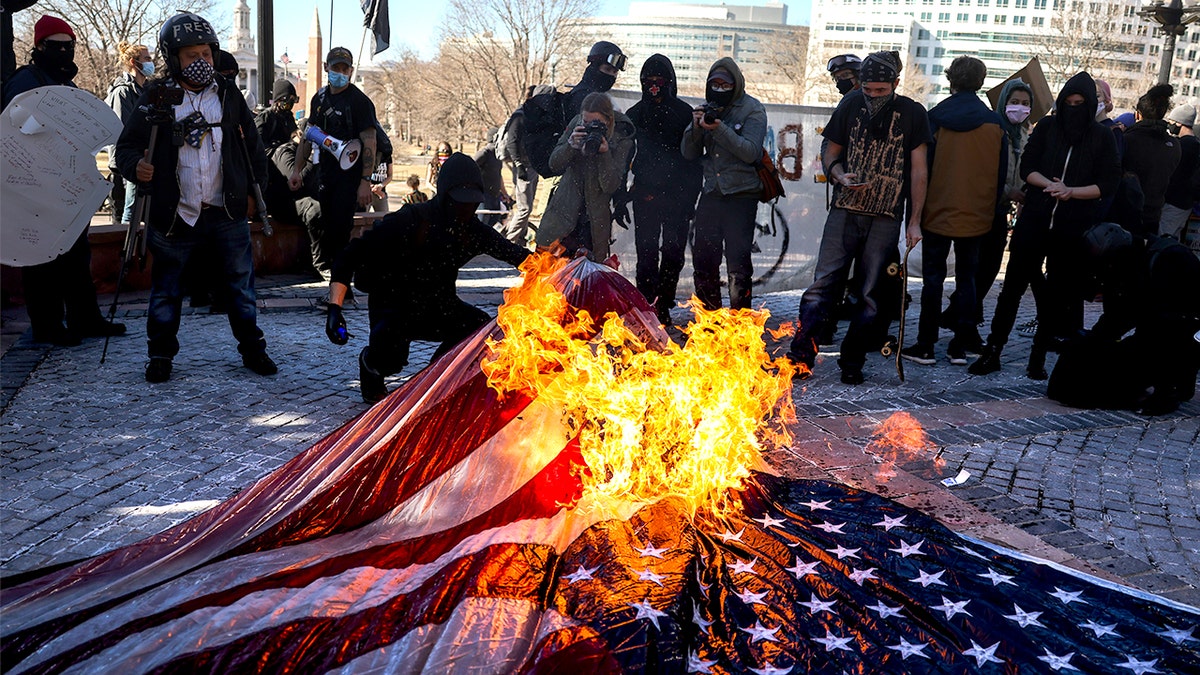
You've probably seen the viral clips. Flames in the street, black-clad figures with shields, and the immediate question that follows on social media: Who is actually paying for this? It's a massive talking point. Honestly, it's become a staple of American political discourse. Some people are convinced there's a shadowy billionaire behind a mahogany desk cutting seven-figure checks to "professional" rioters. Others argue it’s just a bunch of broke college kids sharing a single crusty megaphone.
The reality of who is funding antifa is way more boring than a spy novel, but it’s arguably more interesting if you actually care about how modern movements survive.
The Myth of the Centralized Bank Account
Let’s get one thing straight immediately: Antifa is not a company. There is no "Antifa Inc." based in a glass tower in Seattle. Because it’s a decentralized movement—basically a set of ideologies and tactics rather than a formal organization—there isn't a central treasury to audit.
If you're looking for a smoking gun where a single donor funds the "National Antifa Headquarters," you’re going to be looking for a long time. It doesn't exist.
What the Investigations Actually Showed
In late 2025, the federal government took some pretty aggressive steps. President Trump signed an executive order (specifically designating Antifa as a domestic terrorist organization in September 2025) which directed the Treasury and the DOJ to hunt down the money.
The FBI and Joint Terrorism Task Forces (JTTFs) started digging into what they called "material support."
What did they find?
Mostly, they found a lot of small-scale, local "mutual aid" networks. We're talking about Venmo, CashApp, and GoFundMe campaigns. If a group needs $400 for a new PA system or $200 for medical supplies (like eyewash for tear gas), they post a link on X (formerly Twitter) or Signal. Their followers—regular people—send five or ten bucks each.
It’s the "death by a thousand papercuts" version of financing.
Real Examples of Money Flow
There have been specific arrests that give us a peek under the hood. In October 2025, the FBI arrested a group they called a "North Texas Antifa Cell."
The charges weren't about millions of dollars. They were about "material support" that included:
- Body armor purchases.
- Fireworks (used as distractions or projectiles).
- Spray paint.
- Travel expenses for a handful of people.
In these cases, the "funding" usually comes from the members themselves or small-scale crowdfunding. Think of it like a hobbyist club, except the hobby is radical political activism. They pay dues. They share gas money. It's DIY to the core.
The George Soros Connection: Fact or Fiction?
We have to talk about George Soros.
For years, his name has been synonymous with the question of who is funding antifa. The theory is that his Open Society Foundations (OSF) pumps money into these groups to destabilize the country.
Here is what the actual tax filings and audits show: OSF funds a ton of liberal and progressive causes. They fund bail funds, voting rights groups, and immigrant advocacy organizations.
Sometimes, the people who receive help from those broad organizations (like a bail fund) might be antifa activists. However, no credible investigation—including the high-pressure federal probes of 2025—has ever found a direct line of credit from Soros to a group specifically for "antifa violence."
It’s a game of "six degrees of separation." If you fund a massive umbrella group, and one person three levels down uses that support to go to a protest, does that mean you funded the protest? To some, yes. Legally? Usually, no.
How the 2025 Designations Changed the Game
When the government designated Antifa as a terrorist entity, the financial landscape shifted overnight. It wasn't just about the activists anymore; it was about the banks.
The Treasury Department started pressuring payment processors.
- Crowdfunding blocks: Platforms like GoFundMe and Patreon began preemptively nuking accounts associated with "anti-fascist" keywords to avoid "material support" charges.
- De-risking: Banks started closing accounts of small non-profits that were even loosely "Antifa-aligned."
- Foreign Designations: In November 2025, the U.S. State Department designated several European groups (like Antifa Ost in Germany) as Foreign Terrorist Organizations (FTOs).
This last part is huge. Under FTO rules, "material support" is a strict-liability crime. If you send $20 to a group in Germany that the U.S. has labeled as FTO-Antifa, you could theoretically face 20 years in prison.
This has effectively "scared away" any larger donors who might have previously supported the general vibe of the movement.
Dark Money vs. Grocery Money
Is there "dark money" involved? In the world of 501(c)(4) organizations, money is always moving around. You have groups like the Alliance for Global Justice, which has acted as a fiscal sponsor for various radical causes.
When a group doesn't have its own IRS tax-exempt status, they "piggyback" on a larger organization's status. This is legal and common across the political spectrum. Critics call this a "money laundering" scheme for radicals. Supporters call it "administrative support" for grassroots movements.
Honestly, most of the "equipment" you see at a protest—the black umbrellas, the plywood shields, the leaf blowers—is bought at Home Depot.
It’s not high-tech gear. It’s stuff you buy with a paycheck from a day job. That’s the part people struggle to wrap their heads around. We want there to be a Bond villain because it makes the movement easier to defeat. If you cut off the "head," the body dies. But if the "funding" is just thousands of individuals buying their own helmets, there is no head to cut off.
What You Should Watch For
If you are trying to track the money yourself, stop looking for giant checks. Look for the "nodes."
- Bail Funds: These are the biggest financial hubs. They raise millions during periods of unrest. While they aren't "Antifa," they are the safety net that allows activists to take risks.
- Crypto: Since the 2025 crackdowns on Venmo and PayPal, many decentralized groups have moved to Monero or Bitcoin. It’s harder to track, but also much harder for them to use at a local gas station.
- Legal Defense Committees: These are often set up as temporary 501(c)(3)s or (c)(4)s to pay for lawyers.
Actionable Insights for the Curious
If you’re trying to stay informed on this without falling for the rage-bait, here’s how to parse the news:
- Check the Source: If a report says "Antifa received $10 million," check if they mean the movement itself or a large, unrelated liberal foundation that once shared a zip code with a protest.
- Follow the DOJ Press Releases: The most accurate data on funding comes from federal indictments. Look for "18 U.S.C. § 2339A" charges—that’s the specific statute for material support.
- Understand Decentralization: Accept that two different "Antifa" groups in two different cities might have completely different "funding" models. One might be funded by a wealthy local donor; the other might be funded by a bake sale and a stolen credit card.
The story of who is funding antifa is really a story about the fragmentation of American politics. It’s less about "who is the boss" and more about "how do people without a boss get things done?"
In the current legal climate of 2026, the risks of funding these groups have never been higher. Between the IRS "Catch and Revoke" initiatives and the JTTF's expanded powers, the "money trail" is being scrubbed cleaner than ever—or driven so deep into the dark web that we might never see the full picture.
To stay ahead of these developments, monitor the quarterly reports from the Treasury’s Office of Foreign Assets Control (OFAC). They list the specific entities whose assets are frozen, providing the most concrete evidence of who the government believes is actually moving the needle financially.